


LSU Celebrates Two Distinguished Research Masters
March 30, 2026
Each year, LSU’s Office of Research & Economic Development honors the exceptional research and scholarship of two LSU faculty as Distinguished Research Masters. This year, the honor goes to an expert on opera and an expert on viruses.
Andreas Giger, the Louise & Kenneth L. Kinney Professor of Opera & Musicology in the LSU School of Music, is being recognized for his scholarship in the arts, humanities, social, and behavioral sciences. Konstantin “Gus” Kousoulas, Hannelore and Johannes Storz Professor in Pathobiological Sciences in the LSU School of Veterinary Medicine, is honored for his contributions to science, technology, engineering, and mathematics. The Distinguished Research Masters will talk about their work as part of a public presentation on Tuesday, April 14 at 5:30 p.m. in the Energy, Coast & Environment Building at LSU, followed by a reception and celebration of their individual contributions to the university and the world.
“It’s an honor to see these two giants in LSU research and scholarship recognized,” said Robert Twilley, vice chancellor of research and economic development at LSU. “Both of these scholars have helped put LSU on the map among the world’s leading research universities.”
Distinguished Research Master Andreas Giger
(Arts, Humanities, Social & Behavioral Sciences)
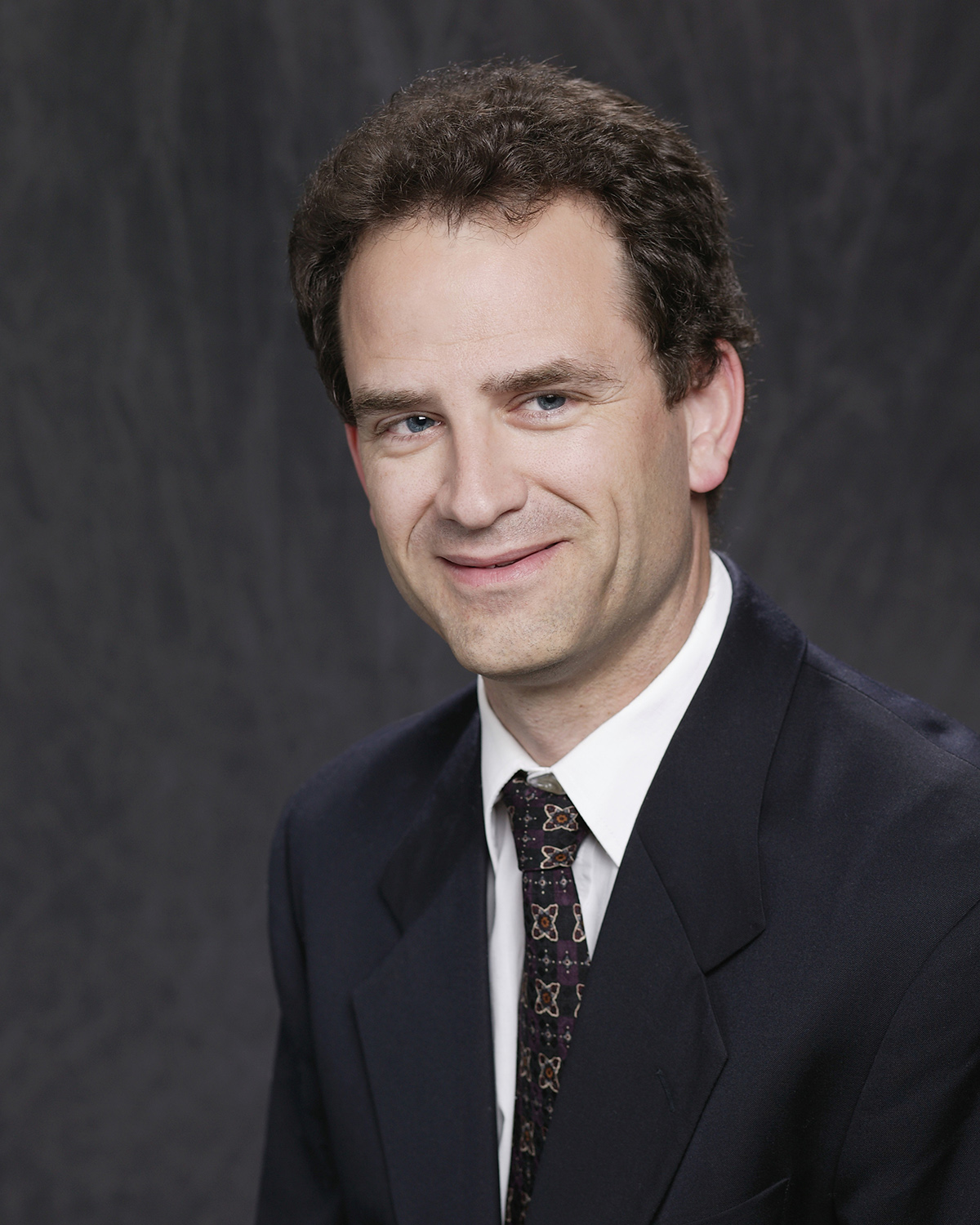
Andreas Giger
An LSU faculty member since 2000, Andreas Giger has distinguished himself as one of the foremost experts on nineteenth-century Italian opera. His most recent work has involved the preparation of critical editions of some of the most famous operas: Verdi’s I due Foscari and Un ballo in maschera, Mascagni’s Cavalleria rusticana, and Leoncavallo’s Pagliacci. By meticulously studying the composers’ holograph manuscripts, archival copies, early librettos, sketches, and a wealth of contextual material, he has been able to restore these works to the version intended by the composer and, in the case of Cavalleria rusticana, recover music that had not been heard for over a century. His work has been published by major publishers such as the University of Chicago Press, Ricordi (Milan), and Bärenreiter (Kassel) and has been translated into multiple languages. Giger’s expertise is renowned the world over, and he has repeatedly been sought as a consultant by conductors at major opera companies, including the Metropolitan Opera. It would be difficult to overstate his influence on performers and scholars alike.
In addition to his editorial work, Giger has published pathbreaking studies on the connection between melodic and poetic rhythm, the system of operatic censorship, and the oft-misunderstood relationship between Italian opera and the art-historical movement called “verismo.” His scholarship on the latter, for instance, has redeemed the application of the designation “verismo” to late-nineteenth-century opera and clarified our understanding of its relevance to music, painting, and literature.
Giger has been honored with a highly competitive National Endowment for the Humanities Fellowship three times and, at LSU, with the Rainmaker Award, Distinguished Faculty Award, and Distinguished Faculty Teaching Award. He serves on the Board of The Works of Giuseppe Verdi (Ricordi) and is the founding co-editor of Masterpieces in Italian Opera (Bärenreiter).
“Opera is the most powerful of the musical arts because it involves all the components of music combined with those of the theatre,” Giger said. “All of these must come together in perfect synergy for a successful performance. But this can only happen when performers understand the aesthetic principles underpinning an opera and have complete and accurate scores that capture the composer’s intentions. LSU has been training students to achieve such performances since the 1930s, when star baritone Pasquale Amato was hired to put LSU’s opera program on the map. Robert Grayson has continued the tradition for 40 years, and today, LSU alumni appear at the world’s leading opera houses.”
“It is an honor to join in this tradition by adding academic dimensions to our students’ education that would be difficult to find anywhere else and by creating critical editions that benefit scholars and performers all over the world.”
Andreas Giger, Distinguished Research Master
Giger earned his PhD in Musicology from Indiana University in 1999.
Distinguished Research Master Konstantin “Gus” Kousoulas
(Science, Technology, Engineering & Mathematics)
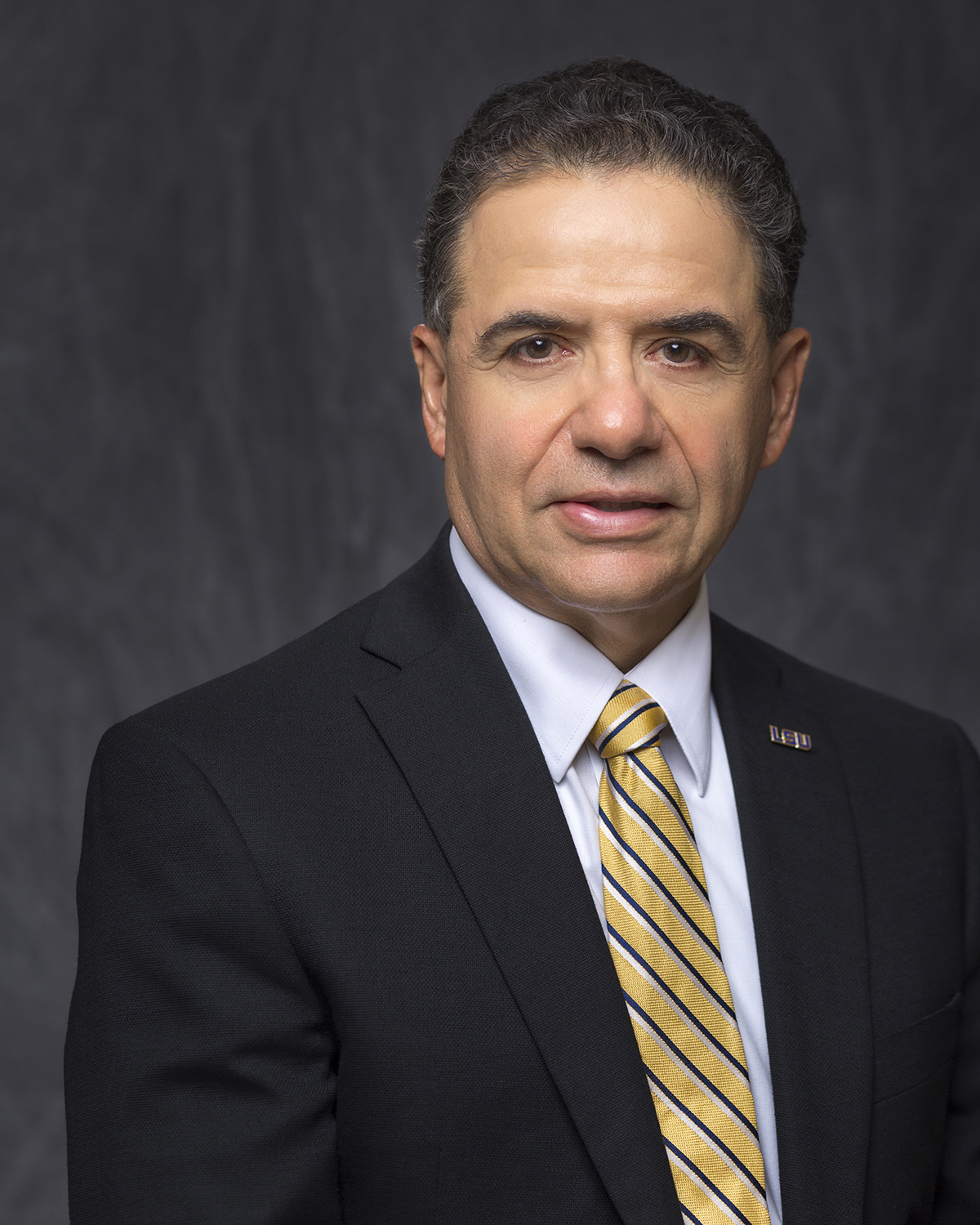
Gus Kousoulas
Konstantin “Gus” Kousoulas is an internationally recognized molecular virologist who has served at LSU for almost four decades. His research not only expands knowledge of how the molecular mechanisms of viruses allow them to penetrate cells, replicate and spread, but also leads to real-world clinical applications. He has used the findings of his studies to create and patent vaccines—nine of which have been granted, with 10 additional pending patents. One of these viral vaccine interventions, VC2, holds immense promise as a treatment for cancer (such as breast cancer and melanoma), and has recently been approved for clinical trials. His productivity in these efforts earned him recognition as a National Academy of Inventors Fellow in 2020, the highest distinction for academic inventors. He has additionally been honored with the Beecham Award for Excellence in Research and the LSU Distinguished Faculty Scholar Award, Distinguished Faculty Teaching Award, as well as two Rainmaker Awards throughout his career.
Kousoulas has demonstrated immense capacity through his research and service. He has published over 170 articles in high-impact journals such as the Journal of Virology, Frontiers in Immunology, and Vaccine, and has been a principal and co-principal investigator on grants for agencies including the NIH, NSF and USDA that have cumulatively received over $200 million in funding. He is currently the director of the Louisiana Biomedical Research Network, head of the Department of Pathobiological Sciences and director of the Division of Biotechnology & Molecular Medicine, having previously served as associate vice president of LSU’s Office of Research and Economic Development from 2013 to 2019. His stewardship in these positions significantly expanded LSU’s research infrastructure, resulting in the Shared Instrumentation Facility (recently rebranded as the Advanced Microscopy and Analytical Core) and the Transformational Technologies and Cybersecurity Research Center (now the LSU Cyber Center).
“I am deeply honored to receive this recognition from LSU, an institution that has been my academic home for nearly four decades,” Kousoulas said. “This award reflects the collective efforts of more than 40 outstanding PhD students, postdoctoral fellows, and many other trainees, and collaborators who have shared in the pursuit of discovery. My career has been driven by a simple goal to understand how viruses function at the most fundamental level and to translate that knowledge into meaningful advances, from vaccines to emerging cancer therapies. I am especially proud that our work has moved beyond the laboratory toward clinical impact, exemplified by the progress of the VC2 platform.”
“I remain committed to advancing biomedical research, mentoring the next generation of scientists—especially in molecular biology, data science, structural biology, and bioinformatics, and contributing to LSU’s continued growth as a leader in innovation and discovery.”
Gus Kousoulas, Distinguished Research Master
Kousoulas earned his PhD in Molecular and Cellular Biology from Pennsylvania State University in 1981.